
Judgment Sheet
The 7 Most Confusing Questions on the "Is This Cheating?" Sheet
Why these 7 questions get their own explanation
Since the sheet went viral, one kind of comment keeps appearing: "What does question number X actually mean?" Because the wording is short, translations lose nuance, and people's cultures and personal histories differ, some questions are genuinely easy to misread.
So this article takes the seven hardest-to-read questions out of the 40 and explains them one by one, as a reference for when you fill in the sheet.
For each question, you'll see the original Japanese and a plain-language restatement, in that order.
All examples use one setup: you are the one answering, and the person doing the thing is your boyfriend or husband. After he does it, where do you land — cheating, not cheating but still upsetting, or totally fine?
Question 4: Hanging out one-on-one with an opposite-sex friend your partner knows
Original Japanese: Koibito mo shitte iru isei no tomodachi to futari de asobu
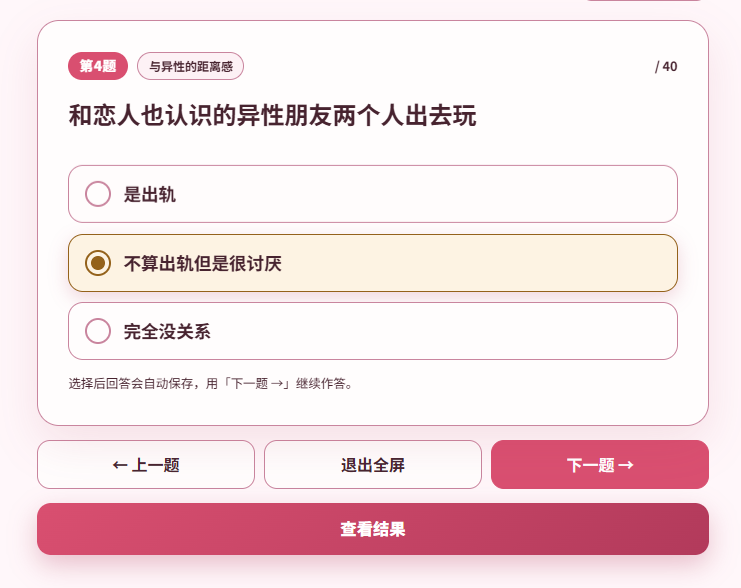
In plain words: Your boyfriend (husband) has an opposite-sex friend — a woman. The three of you have met, so you know she exists. One day, he goes out to hang out with her, just the two of them. So, do you think your partner cheated? Not cheating but still upsetting? Or totally fine?
Question 11: Genuinely enjoying being called "cute/handsome" by the opposite sex
Original Japanese: Isei kara "kawaii / kakkoii" to iwarete futsuu ni yorokobu
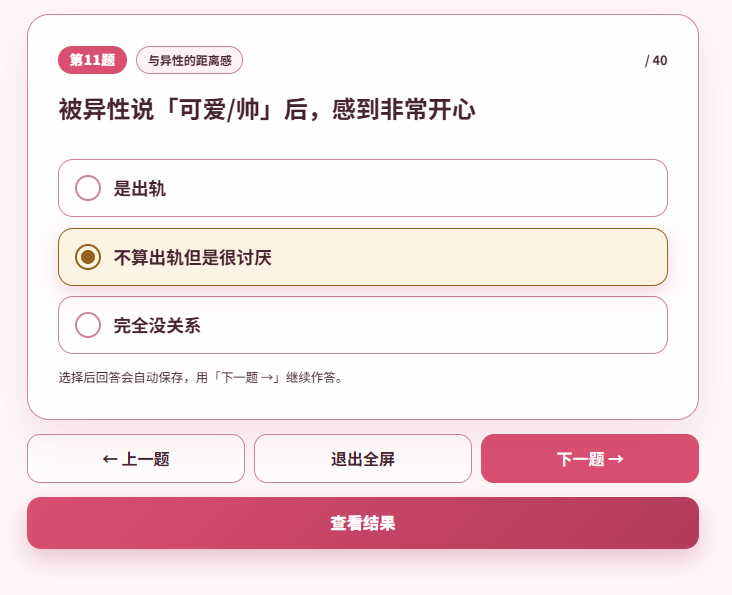
In plain words: Your boyfriend (husband) gets called "handsome" by a woman, and he clearly loves it — he's in a great mood all day and even brings it up again when he gets home. So, do you think your partner cheated? Not cheating but still upsetting? Or totally fine?
Question 17: Calling each other by a nickname only the two of them get
Original Japanese: Isei no tomodachi ni dake tsuujiru adana de yobiau
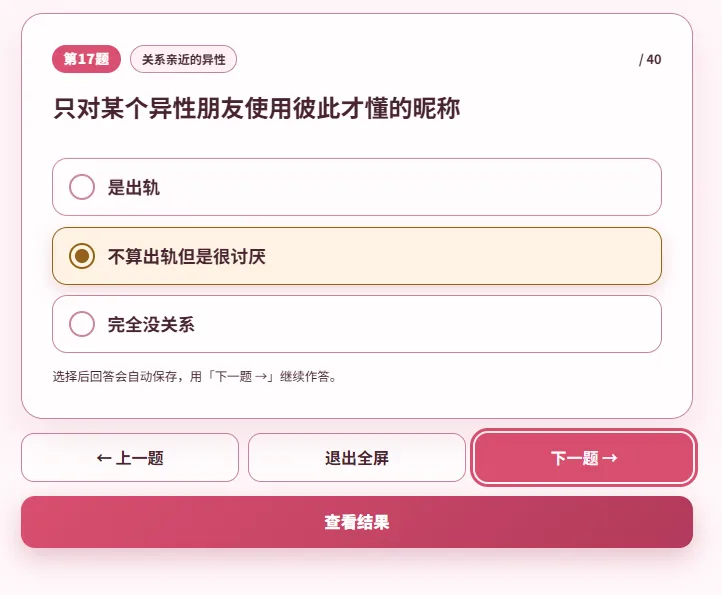
In plain words: Your boyfriend (husband) has an opposite-sex friend, and when he calls her, he uses a nickname that only the two of them understand. You've never heard the nickname and don't know where it came from. So, do you think your partner cheated? Not cheating but still upsetting? Or totally fine?
Question 19: Being told "you're my closest opposite-sex friend"
Original Japanese: Isei kara "ichiban naka yoi isei no tomodachi" to iwareru
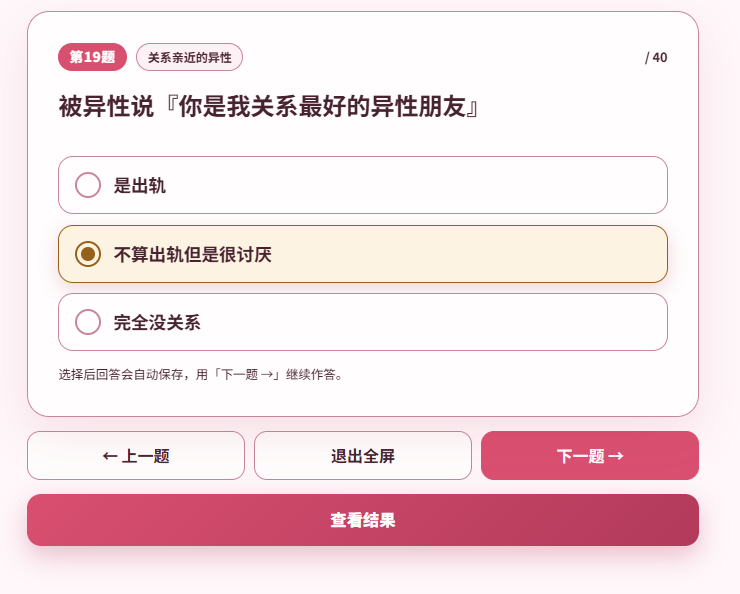
In plain words: An opposite-sex friend of your boyfriend (husband) tells him: "You're my closest opposite-sex friend." In other words, he ranks first among her male friends. So, do you think your partner cheated? Not cheating but still upsetting? Or totally fine?
Question 20: Laughing off a "dating you would be fun" joke
Original Japanese: Isei ni "◯◯ to tsukiattara tanoshisou" to joudan-poku iwarete waratte nagasu
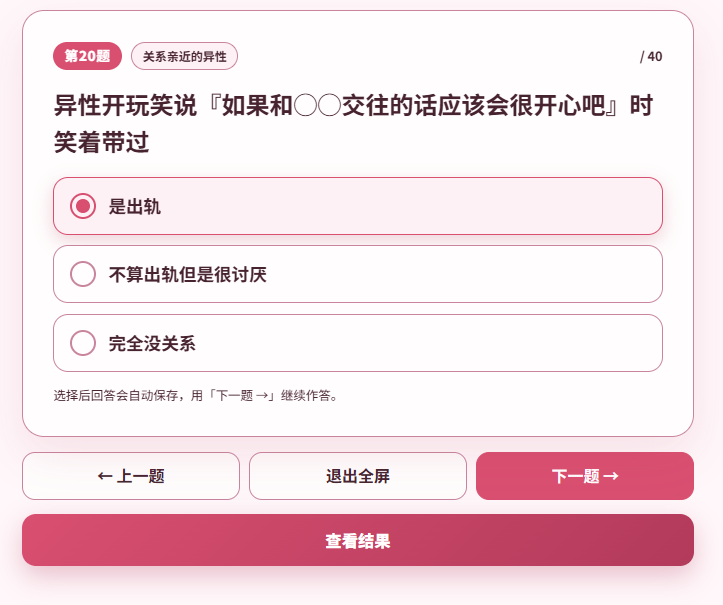
In plain words: A woman jokes to your boyfriend (husband): "Dating you (◯◯) would probably be really fun." He doesn't take it seriously when he hears it, doesn't seriously turn it down either — he just laughs it off. ◯◯ here stands for your partner's name. So, do you think your partner cheated? Not cheating but still upsetting? Or totally fine?
Question 39: Thinking "good for them" after hearing an ex has a new partner
Original Japanese: Motokoibito ni atarashii koibito ga dekita to kiite "yokatta" to omou
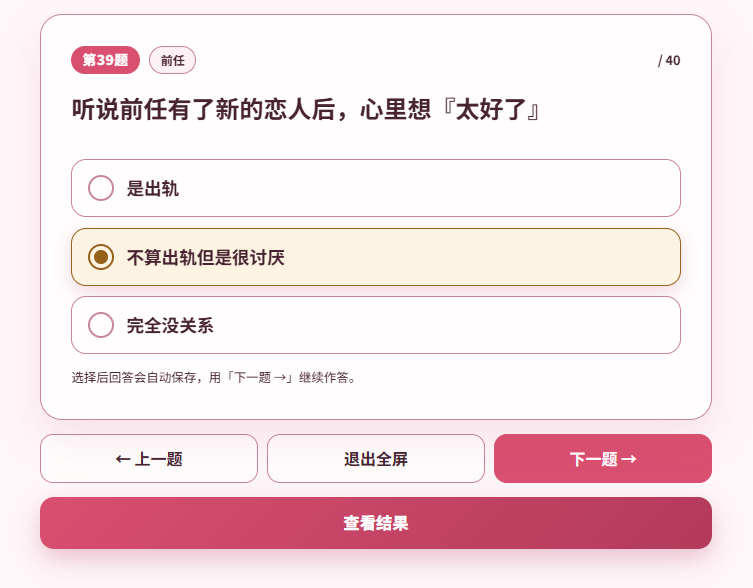
In plain words: Your boyfriend (husband) hears that his ex-girlfriend has a new boyfriend, and thinks "good for her." — Why would this scene even be a question? Because the ex may still have been hanging on, and the new relationship may be what finally set your boyfriend free. There's that deeper layer to it. So, do you think your partner cheated? Not cheating but still upsetting? Or totally fine?
The final question: Would your answers change if you were the one doing it?
Original Japanese: Jibun ga yaru-gawa nara kotae kawarimasu ka?
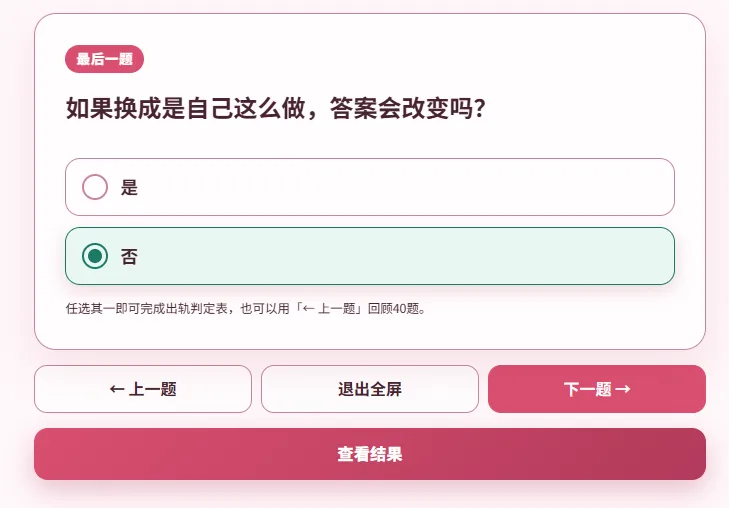
In plain words: For the previous 40 questions you were judging other people's actions. This one flips it around: if you were the one doing these things, would your verdicts change? For example, you marked "karaoke one-on-one with an opposite-sex friend" as cheating — but you yourself went to karaoke with a male coworker just last week, one-on-one, and at the time it felt like a totally normal team event? Or: you use a nickname with a certain opposite-sex friend that only the two of you get — would that look like cheating to someone else? ... So, when you're the one doing it, does your answer change?
After the explanations: what next
The sheet has no correct answers. The three-option design already assumes that the same question gets different answers from different people. The more a question splits readers, the more it's worth taking to your partner or friends for one round of answer-swapping — wherever your readings diverge is exactly where your boundary lines sit.
To fill in the original 40 questions online, the online sheet on this site's front page follows the original questions and order — one tap per answer, and it generates a result image when you finish. To see how others answered these tricky ones, the answer comparison tool collects question-by-question answers from 33 streamers; pick the "you vs. streamers" mode to check your matches and mismatches on all 40 questions, these seven included.
Frequently asked questions
Do these 7 questions have correct answers?
No. The sheet measures your personal boundary, and the three answer options already assume that people will disagree. This article only explains what each question is asking, so you can pick your own answer more precisely.
Do translations lose some of the original nuance?
Yes. Each explanation includes the original Japanese wording. Phrases like "futsuu ni yorokobu" in question 11 lose their casual tone in translation, so when something feels off, check back against the original.
Why do all the examples assume the reader is a woman and the boyfriend/husband is the one acting?
Only to keep the examples concrete. The sheet works for any gender and any relationship — swap the example for your own situation as you read.
Answer the judgment sheet online for free